52 Ancestors – Week 11 – Hyacinth Pelletier

For this week in Amy Johnson Crow’s genealogist challenge: 52 Ancestors in 52 Weeks, I am going to write about my maternal 2nd great-grandfather, Hyacinth Pelletier (1849-1911).

Researching my maternal ancestors has been a rather difficult process. In the case of my 2nd great-grandfather I believe some sort of transcription error occurred in several Canadian census records.

Just below you can see Hyacinth and his wife living near Crooked Lake in the Assiniboia area of the Territories in the 1901 Census. They’re recorded as being ‘F.B.’, Roman Catholics, with their mother tongue being French. I wasn’t sure what ‘F.B.’ meant but a look at what the Métis National Council had on information about the 1901 Census indicates that this was how enumerators recorded individuals with mixed blood. In this case, Hyacinth and his wife are what they described as being ‘French breeds’. A look at the LAC had on the census also noted that Aboriginal tribes would have been traced through their mothers and the specific tribe name was to be recorded. It is interesting to note that this was not done by the enumerator.

1901

1901

I’ve been unable to find Hyacinth and his wife in the 1906 census. Furthermore, something odd occurs in the census records that follow. Hyacinth Pelletier is now a widowed woman. She is recorded as being Cree, Roman Catholic, and can speak ‘Indian’ and French. She is also living with her son Joseph Pelletier (1876-?) and their family.

1911 Hyacinth

1911

Hyacinth is then recorded as living with her son Joseph Pelletier as well as her nephew and niece Emmanuel and Angelique LeRat in the 1916 Census. The same information from the 1911 Census is recorded regarding her race, religion, and languages.

1916

1916

Hyacinth is then recorded as living with her son Joesph Pelletier and his family in the 1921 Census. She is recorded as being blind while the same information is recorded for race and religion, however she is recorded as being unable to speak French.

1921

1921

The changes in the census records from 1911 to 1921 make me believe that the person recorded as ‘Hyacinth Pelletier’ is in reality his wife Julienne LaVallee (1853) and that Hyacinth must has died sometime before the 1911 census. If I could find either person in the 1906 census it would make matters a little clearer but it could be the case the Hyacinth passed away before the 1906 census. Furthermore, my knowledge of Julienne as his wife and the rest of the family is murky at best as I used unsourced family trees from Ancestry. I do know from speaking with family that we are related to the LaVallee and LeRat family names but I have no firm knowledge on specifics.

52 Ancestors – Week 6 – Mary Sarah Pelletier

For this week in Amy Johnson Crow’s genealogist challenge: 52 Ancestors in 52 Weeks, I am going to write about my maternal grand aunt, Mary Sarah Pelletier (1898-).

I do not know much of my grand-aunt, what I do know I’ve gathered from census records. My mother tells me she remembers little of her aunts who seemed to have been all given ‘Mary’ or ‘Marie’ as a precursor to their name.

Mary Sarah can be found in the 1901, 1906, 1911, 1916 and 1921 census living on the Crooked Lake Indian Reserve. On the 1916 census she can be found living with her husband James Agecoutay. Mary Sarah and her three children (David, Emma, and Stephen) are later found living with her father in the 1921 census; Mary Sarah’s marital status is listed as widowed.

1921 census

1921 census

From here on I do not know what became of my great-aunt or my cousins. I wonder what happened to James Agecoutay, he likely died by disease or misfortune. The birth of his youngest child indicates that he most likely was still alive only 15 months prior to the census. A basic search of Saskatchewan’s vital records has provided me with no new information. I’m not sure what sort of records I can search to progress in finding how what happened.

When the TRC public archives opens I may be able to search available records of Residential Schools to find relatives who attended them. It is likely that my cousins attended the Crooked Lake Residential School like their mother (and most likely their father too).

52 Ancestors – Week 5 – Napoleon Pelletier

EDIT: Please visit this blog post for new research. Portions of the following blog entry on Napoleon Pelletier are now out-of-date based on research done on Treaty annuity records.

I want to keep the information in this post unchanged beyond this addendum about the identity of his mother. I was previously under the impression that Marie Adele Lerat (1888-) had been his mother, but in fact, she was his step-mother.

You can read more about this discovery here.

For this week in Amy Johnson Crow’s genealogist challenge: 52 Ancestors in 52 Weeks, I am going to write about my maternal grandfather, Napoleon Pelletier (1905-1985). He was born on the Cowessess First Nation to parents Joseph Pelletier (1876-) and Marie Adele Lerat (1878-) in 1905. He had six other siblings that I am aware of although it is highly possible he may have had more.

Napoleon attended the Cowessess Indian Residential School and he can be found in the 1916 census. Cowessess Indian Residential School opened in 1898 and was later renamed Marieval. Residential schools that ran during this era typically used the half-day system where students would attend classes for half the day and work the other half. Napoleon would have most likely worked in the fields to provide food for the rest of the students or done other chores to keep the costs of the school low. My grandmother- his wife, Marie Cecilla Allary, also went to Cowesses. Her memories of the school during this era were not very pleasant, she remembers that the uniforms were rough, almost like potato sacks, and that she worked mostly in the kitchen to provide food for others students rarely ever spending time in a classroom.

pelletier, nap 1916 census

c. 1916

One of the issues I have with researching my Aboriginal ancestors are the records. First, there is nothing much in regards to census records before Saskatchewan became a province in 1905. The area where my family would have lived was known as The Territories, more specifically Assiniboia, but what complicates the search for them in official records is the fact that they traveled between the Canadian and United States border.

Another issue in regards to researching Aboriginal ancestors are the names. Names that I am related to are Agecoutay, Allary, Lerat, and Lavallee – this is not an exhaustive list. When looking at the census records between 1901-1921 there are many families on the reserve and just outside of it with these names and it’s hard to determine who is the right Napoleon Pelletier. Furthermore, the spelling of these names are varied and it is difficult to look for family when Pelletier has been recorded as Pelter, Peliter, or even Pelger! What worries me further is whether family members also went by traditional names which I would have no know of thereby missing individuals entirely.

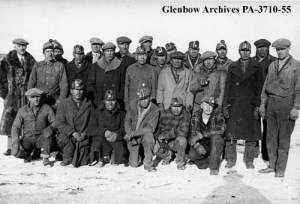
Napoleon married my grandmother sometime in the late 1920s or very early 1930s; he and his family moved to southern Alberta where they lived on the Blackfoot (Siksika) reserve and where Napoleon worked as a miner. I have located two photos of my grandfather from the Glenbow Archives during this time. My grandfather is in the second row, second on the left.

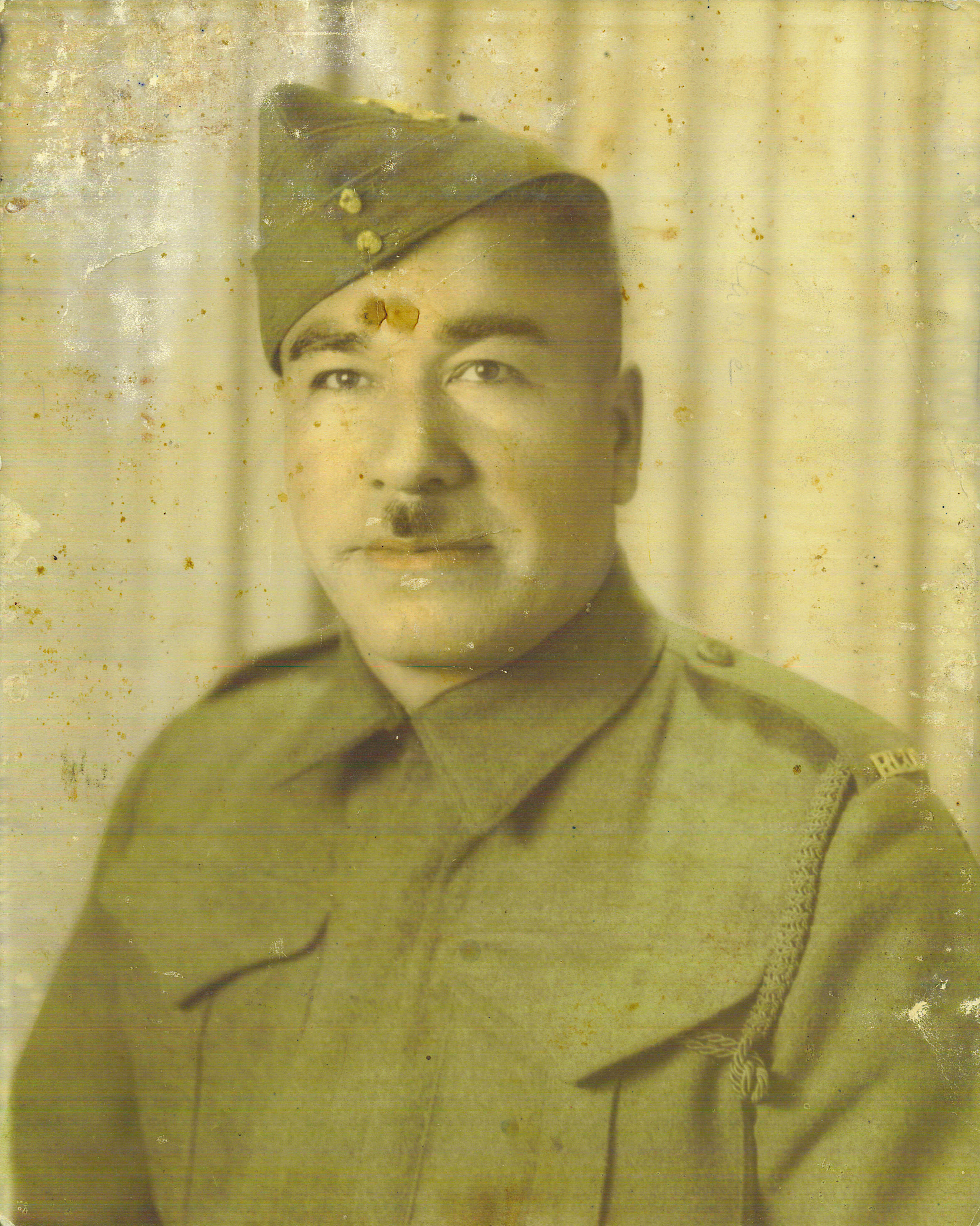
Napoleon fought in Italy during the second world war. I have yet to get a copy of his military records although I’m very interested in taking a look at them. Apparently, Amsterdam was one of his favourite cities and when my mother came to visit me this past summer she lit a candle in one of the churches in his memory. My mother says he never spoke about his time in the army but that when he returned his once black hair had turned white and said it was because of what he had seen. (I have gotten the photo below restored and gave it to my mother as a Christmas present in 2012.)

c. 1941

c. 1941

Napoleon passed away just before Christmas in 1985. He is buried alongside his wife in Marieval, Saskatchewan, at the Sacred Heart of Mary Roman Catholic Church. There is still much that I want to know about my grandfather and the fact of the matter is that I just haven’t asked enough questions. This is the year that I am going to sit down with my mother and contact my other relatives in order to get as much as I can.

52 Ancestors – Week 4 – Joseph Pelletier (the Carnegie Hero)

This week in Amy Johnson Crow’s genealogist challenge: 52 Ancestors in 52 Weeks, I am going to write about my mother’s side of the family. Being the ‘baby’ of the family I have missed meeting many of my older relatives simply because I am the age of many of my nephews and nieces, as a consequence, many events that my siblings have been privy to have happened long before I was born.

Today, I am going to write about one of my uncles, Joseph Pelletier (1947-1973). Joey was born the second last of my mother’s siblings, eleven children in total. My mother and her siblings, including Joey, grew up on a Blackfoot reserve in southern Alberta.

Being Aboriginal children in the 1930s-1960s they would have been required to have attended Indian Residential School. I do not know much about their lives during their childhood and youth as there are only three of the eleven siblings alive today, including my mother, and I believe this reflects on the harsh lives they lived. I can only speculate, based on my studies and work with the Truth and Reconciliation Commission of Canada, on the treatment of my mother’s siblings in the residential school system. My mother is lucky, she can remember mostly good memories of her time at Crowfoot IRS either because her experience was better than most or because she has blocked any painful memories out for good reason. Anyway I am getting off topic- more on Indian Residential Schools in a future post.

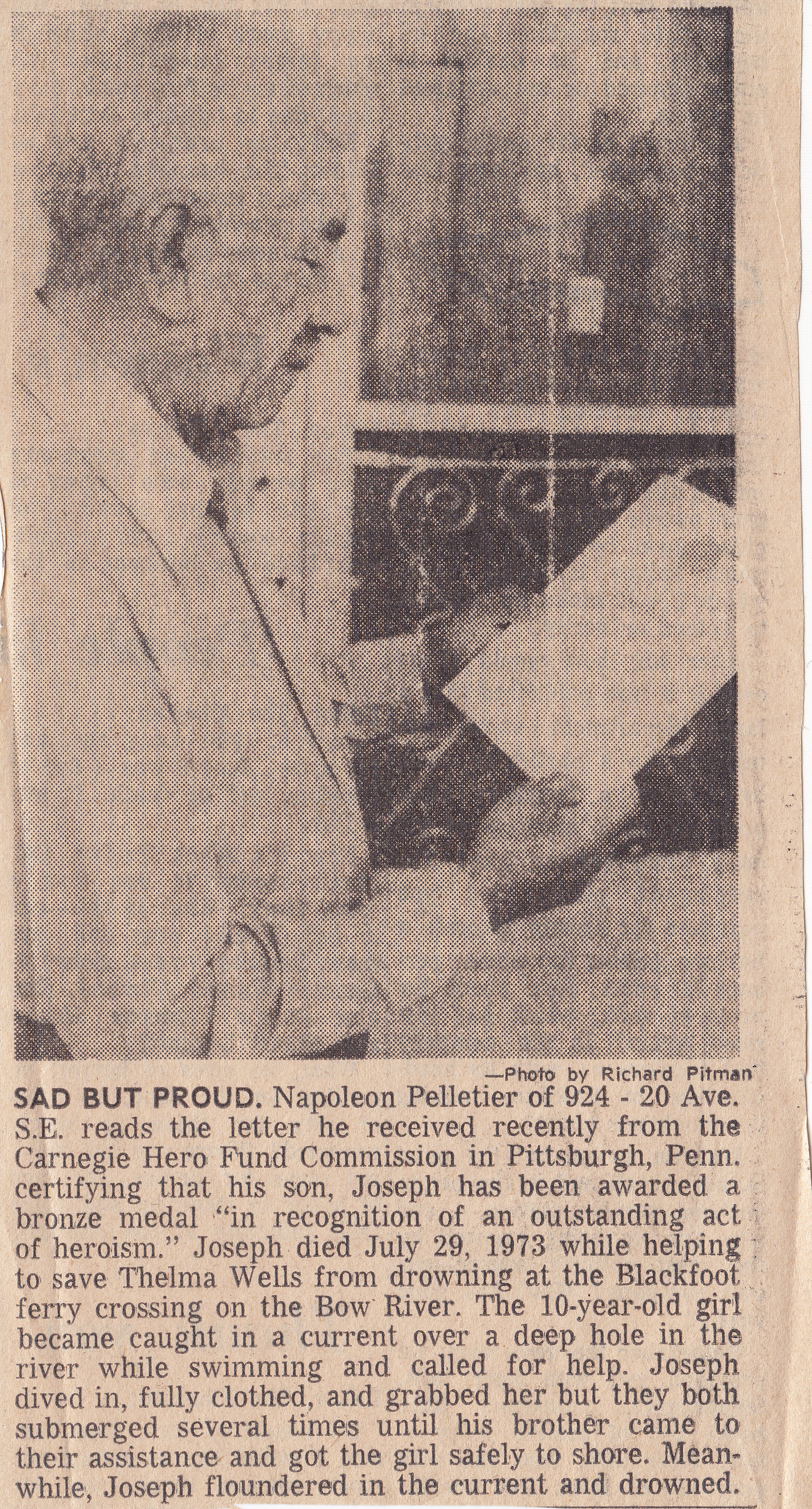
On the morning of 29 Jul 1973, while swimming in the Bow River, 10-year-old Thelma A. Wells, became caught in the revolving current over a hole in the river bottom and called for help. Joey, my uncle, having heard her cries, entered the water fully clothed and swam to her. A struggle ensued; and both were submerged briefly several times. Joey called for assistance. His younger brother, Robert, entered the water and swam to them. While Robert was able to take Thelma safely to the bank, Joey floundered in the spinning current over the hole and drowned before help reached him.

The Carnegie Hero Fund Commission awarded Joey the bronze Carnegie Medal in recognition of his outstanding act of heroism. The purpose of the Carnegie Hero Fund is to award individuals in the United States and Canada who risk their lives to an extraordinary degree saving or attempting to save the lives of others.

pelletier joey newspaper

c.1973 (Calgary)

Above is a clipping from a newspaper, most likely from Calgary, that was with the Carnegie award certificate in our basement. I do not know what has happened to the bronze metal itself because we do not have it. I can only hope one of my aunts have it in their possession otherwise it has been lost, most likely when the government seized my grandmother’s property when she passed away in 1990. I am tempted to contact the Carnegie Hero Fund to see whether a replacement medal can be given to the family again. Couldn’t hurt to ask anyway.

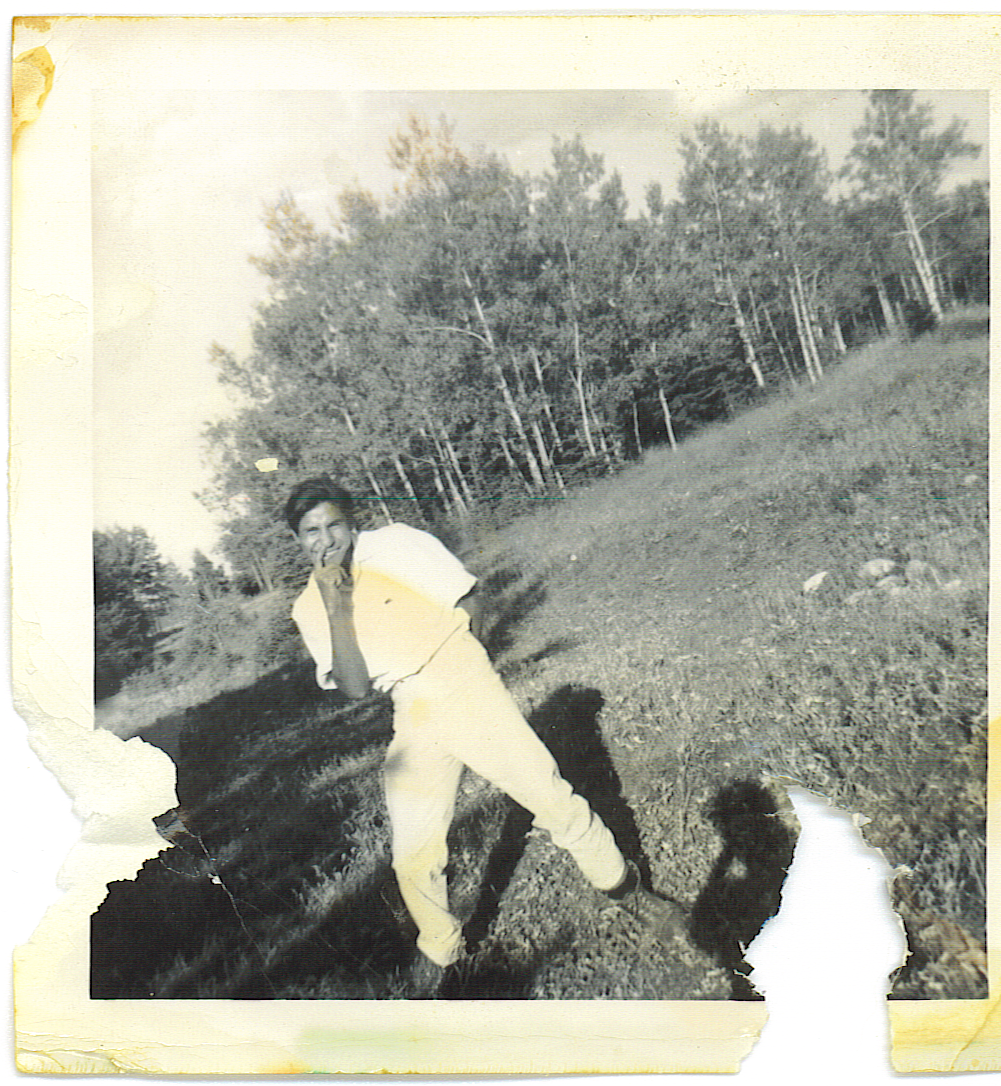
c. 1962

c. 1962

While I do not know much of my uncle Joey this act of bravery makes me wish I could have known him during his brief life. One of the rare photos I have in my possession shows a smiling young man full of life– even a bit of a comedian, but who isn’t at 15? I wish I had more photos of him as well as other members of my family whose faces are now lost to memory and time. This is why I treasure the photos, documents, and artifacts I am able to get my hands on. It is important to me to discover and uncover as much information as I can about my family- the more I get to know them the more I get to know myself.